
Salmonids’ Habitats in a Context of Climate Change
Are you concerned about climate change and its effects on salmonids’ populations in Quebec?
Will your lakes still be able to support salmonids in the next 20-30 years?
-
Click here to learn more about the context of the project and our objectives
-
Click here if you want to meet us
-
Click here if you are interested to be part of this study and if you are concerned about your lakes
The rising water temperatures in Quebec’s lakes have raised some concerns about the viability of salmonid populations, and the quality of recreational fishing.
Most climate scenarios indicate that these trends will continue. This can reduce the amount of suitable habitat for cold-water fish species, such as the brook trout and the lake trout.
CONTEXT
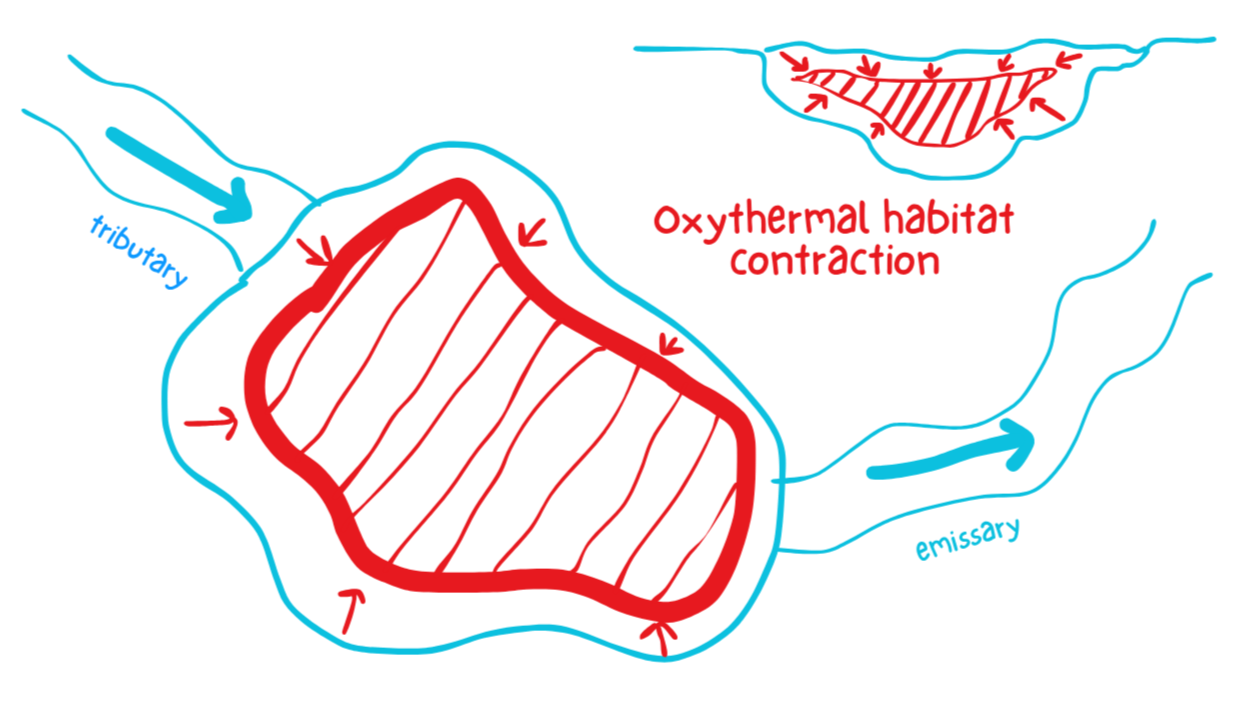
These species depend on a specific “oxythermal habitat” — an environment where water temperature and dissolved oxygen levels are optimal for their survival, growth, and reproduction.
As temperatures rise, this habitat tends to contract, limiting the fish’s ability to use this habitat, increasing their vulnerability.
OBJECTIVE
As part of a doctoral project, we aim to :
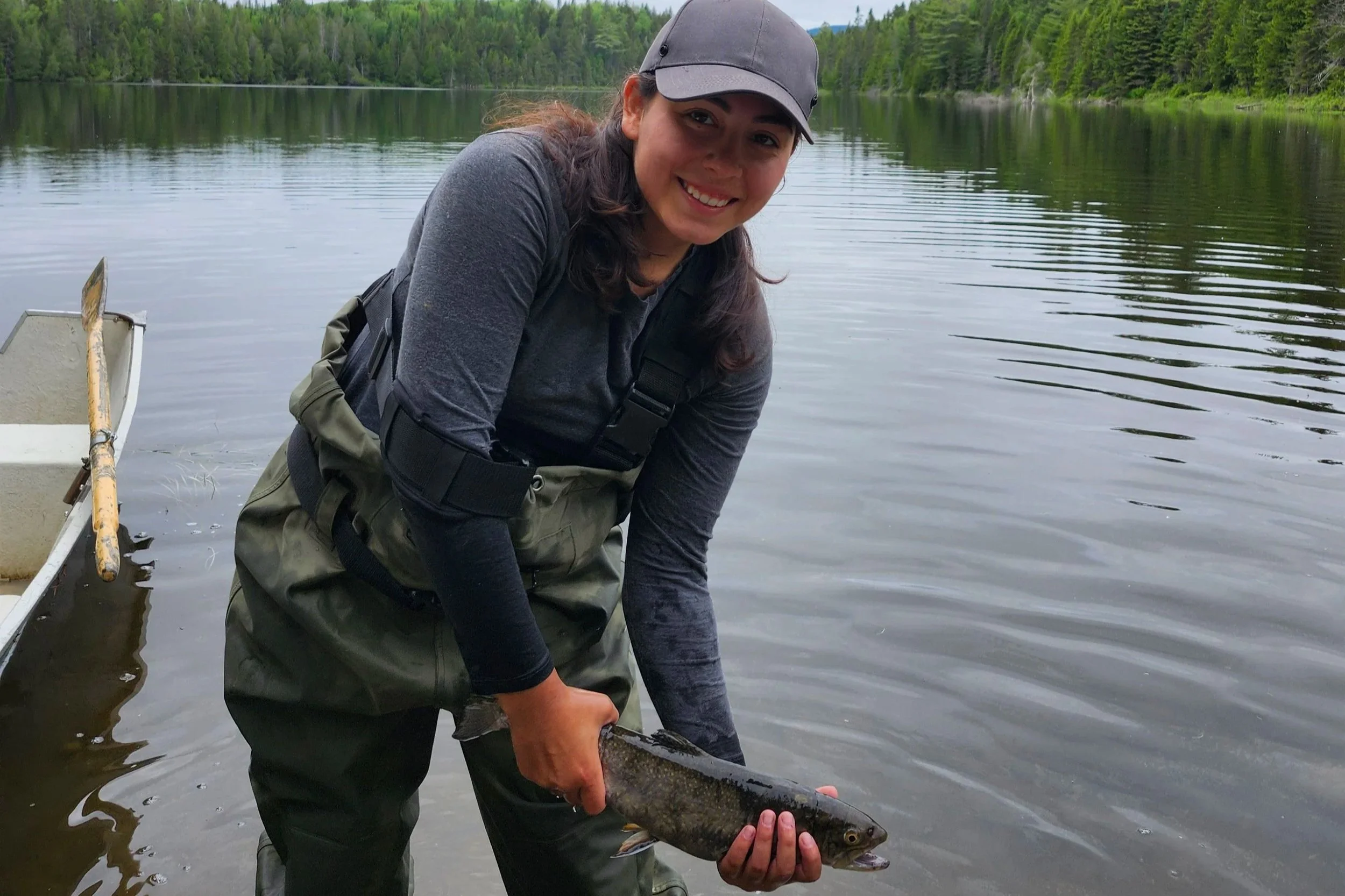
Measure and document the actual oxythermal habitat (i.e., the oxygen-rich habitat) for brook trout and lake trout in several lakes in Quebec that vary in depth, size, productivity.
Predict and model how the future oxythermal habitat will evolve (contract) according to different climate change scenarios.
Explore the perspectives of key stakeholders regarding the future of salmonid fishing in Québec (management practices, solutions), as well as their perceptions and concerns regarding the quality of fishing.
WHAT ARE WE CURRENTLY DOING?
-
![]()
The Atlas Project
-
![]()
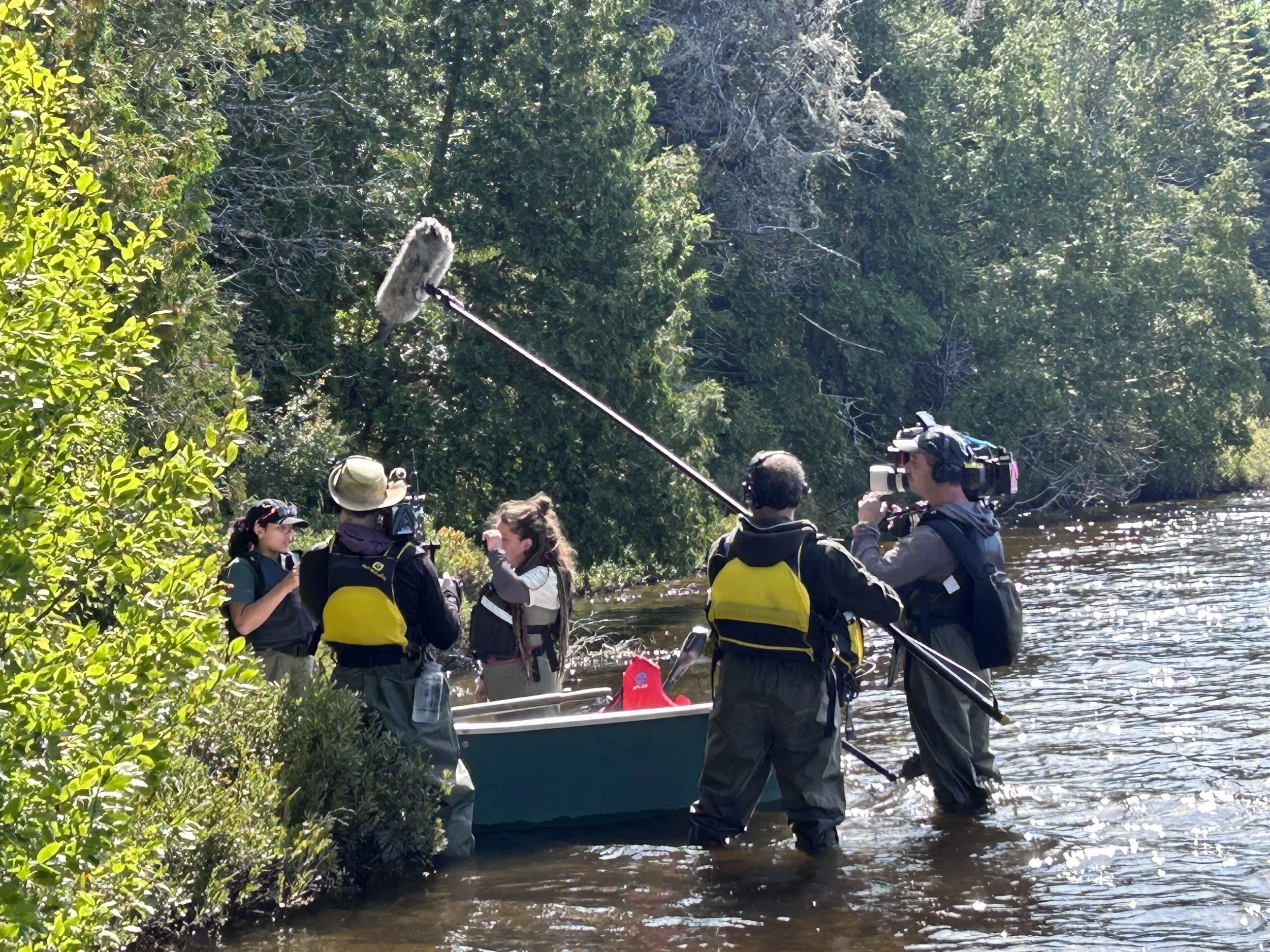
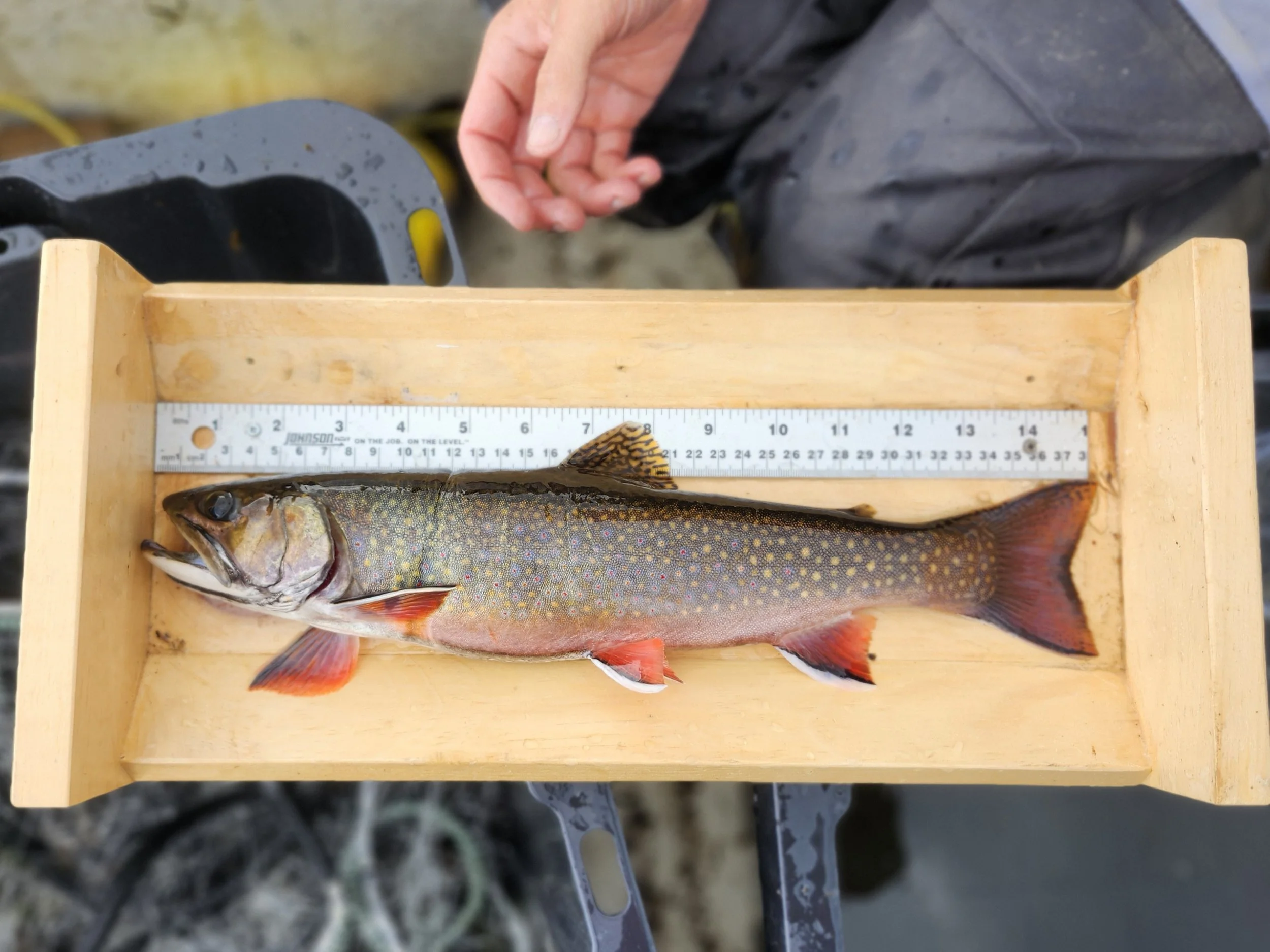
Tournage avec l'équipe du Safari de Joanie - Épisode sur l'omble de fontaine
-
![]()
The Brightline Project
-
![]()
The Northgrid Project
WHO ARE WE ?
Francesca Sotelo is a PhD candidate in the Department of Natural Sciences at the Université du Québec en Outaouais (UQO).
Email : sotf01@uqo.ca

Katrine Turgeon is a Professor in the Department of Natural Sciences at (UQO). Since 2023, she holds a Canada Research Chair (Tier 2) in socio-ecology of conservation.
Email : katrine.turgeon@uqo.ca